


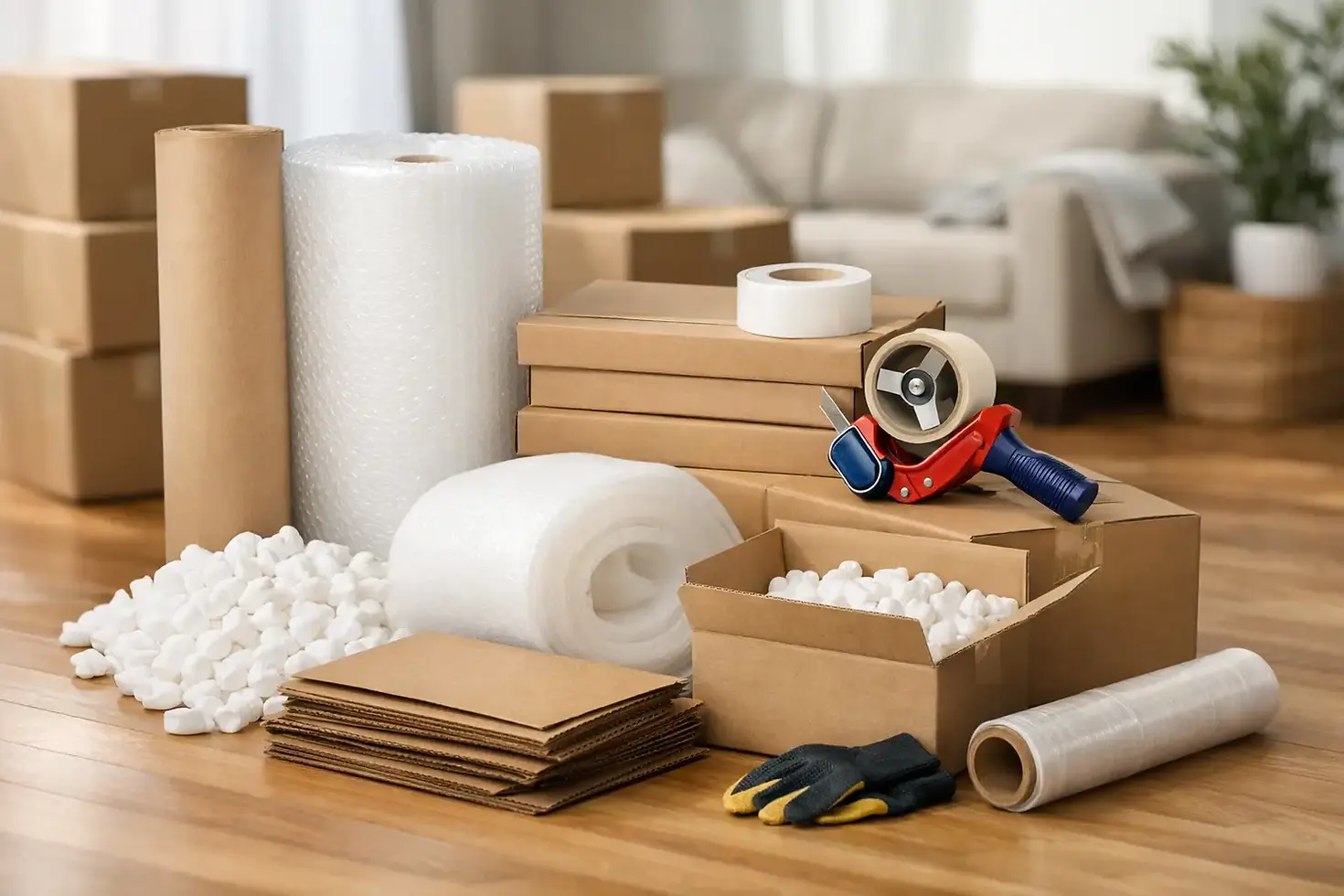
Best Packing Materials for Moving Home Safely

A sofa can survive a surprising amount of use, but one exposed corner against a van wall can leave a mark that never quite disappears. The best packing materials for moving are not necessarily the most expensive ones. They are the ones matched properly to what you own, how far it is travelling and whether it will spend time in storage.
For a straightforward flat move in Kingston or a larger family move across Surrey, good packing is about preventing three common problems: impact damage, rubbing and moisture. Start with sturdy outer protection, then add the right internal cushioning. It makes loading quicker, protects your belongings in transit and reduces the chance of unpleasant surprises when you unpack.
Best packing materials for moving: start with strong boxes
Cardboard boxes remain the workhorse of most house moves, but not all boxes are made for the same job. New, double-walled removal boxes are the safer choice for books, kitchenware, files and other heavy items. Their sides resist crushing when stacked and their bases are less likely to give way when lifted.
Use smaller boxes for dense, heavy belongings. A box full of books may look manageable, but it becomes awkward and unsafe quickly. Larger boxes are better for lighter, bulky items such as bedding, cushions, lampshades and clothing. Keep the weight realistic for one person to carry without straining or losing grip on the stairs.
Second-hand boxes can be useful for light, clean items if they are dry, undamaged and still hold their shape. They are not the right place to cut costs when packing glassware, records, expensive cookware or anything going into longer-term storage. Weak cardboard absorbs moisture, loses strength and can collapse under a stack.
Avoid overfilling every box simply because there is a little space left. Fill gaps with packing paper or soft household textiles, then close the flaps flat. A box that bulges is difficult to stack securely and more likely to split.
Protective wrap: choose it by item, not habit
Bubble wrap is useful, but it is often used where a simpler material would do. It works best around fragile, shaped or high-value items: glass, ceramics, framed art, mirrors, lamp bases and delicate electronics. Wrap the item fully, secure the wrap with tape and make sure no hard surface is exposed at the corners.
For everyday crockery and glasses, plain packing paper is usually the better first layer. It is clean, flexible and easier to pack tightly. Wrap each piece separately, place plates on their edges rather than flat, and use scrunched paper at the base and top of the box. This spreads pressure better than a loose pile of wrapped items.
Newsprint is tempting, but ink can transfer onto white plates, upholstery and light-coloured fabrics. Use unprinted paper for anything that could be stained. Tissue paper is suitable for particularly delicate finishes, though it has little shock protection on its own and should sit beneath packing paper or bubble wrap.
Furniture blankets and padded transit covers are designed for larger pieces. They protect timber, polished surfaces, upholstery and corners from rubbing while items are carried and loaded. For premium furniture, designer pieces or a property installation, blankets should be secured firmly enough to stay in place without tape touching the furniture itself.
Materials that protect furniture and mattresses
Large items need a different approach from boxes. A heavy dining table, wardrobe or mattress can be damaged by movement inside the vehicle even when it has been lifted carefully. The aim is to protect contact points and keep each item stable during transport.
Use these materials for furniture and larger household items:
Furniture blankets or quilted covers for timber, upholstered pieces and finished surfaces.
Stretch wrap to hold drawers, doors and protective blankets in place. Do not apply it directly to fine polished wood or leather for prolonged periods, particularly in warm conditions.
Corrugated cardboard corner protectors for table tops, cabinets, mirrors and framed pictures.
Mattress bags for mattresses and bases, protecting them from dirt, damp and contact with floors or vehicle interiors.
Sofa and armchair covers for fabric upholstery, especially where access routes include communal corridors, lifts or wet pavements.
Stretch wrap is practical, but it is not cushioning. It will stop drawers sliding open and prevent a blanket from slipping, yet it cannot protect a vulnerable corner from a knock. Use it as the final securing layer, not the only layer.
Mattress bags are particularly worthwhile if your move takes place in poor weather, your mattress is being stored, or it must travel through a shared entrance. Choose a bag that covers the full depth and tape any open end once the mattress is inside. Let the mattress air properly after delivery before making the bed.
Tape, labels and the small details that save time
A well-packed box still fails if its base opens. Use quality packing tape, ideally a strong polypropylene or low-noise tape designed for removal cartons. Apply it along the centre seam, then add strips across the ends to form an H shape on heavier boxes. This takes seconds and makes a real difference when a box is carried from a loft, down a stairwell or into storage.
Masking tape is useful for light labelling, but it is not reliable for sealing cartons. Likewise, parcel string is not a substitute for tape and can cut into cardboard or catch during handling.
Labelling matters because removals teams and family members cannot guess what is inside a plain box. Write the destination room on at least two sides and add a short description such as “kitchen - glasses” or “office - cables”. Mark fragile boxes clearly, but pack them properly as well. A fragile label is an instruction to take care, not a guarantee that loose glass will survive movement.
For priority cartons, add “open first” and keep them separate from general boxes. These may contain a kettle, mugs, charging leads, medication, basic tools, toilet roll, bedding and the documents you will need on move day. It is a small bit of organisation that makes the first evening far easier.
What to use for mirrors, pictures and electronics
Mirrors and framed artwork need edge protection before they are wrapped. Fit cardboard corners, cover the face with packing paper or foam sheet, then use bubble wrap and a strong outer cardboard sleeve where possible. Stand framed items upright in the vehicle, never flat beneath other loads. Large mirrors deserve specialist handling and should not be treated as another box to squeeze into a car.
For televisions and monitors, the original packaging is ideal if you still have it. If not, use a correctly sized TV carton, foam or thick bubble wrap, and a rigid screen protector. Never place tape directly on a screen. Photograph the cable set-up before disconnecting it, then place leads, remotes and mounting screws in a labelled bag that stays with the item.
Computers, game consoles and hard drives should travel with you where practical. Back up important files before moving, remove loose discs, and avoid leaving equipment in a cold or damp vehicle overnight. For commercial moves, label cables by workstation and keep equipment inventories clear before packing begins.
Packing for storage needs extra protection
If belongings are going into containerised or single-item storage, pack for more than the journey. Storage adds time, stacking pressure and the possibility of changing temperatures. Use double-walled boxes, clean wrapping and protective covers, particularly for mattresses, sofas and wooden furniture.
Do not seal damp textiles, garden equipment or appliances straight after use. Let everything dry first. Moisture trapped inside a carton or cover can lead to mould, odours and damaged finishes. Avoid using refuse sacks as long-term protection for valuables: they tear easily and can trap condensation.
Leave a simple inventory with box numbers if you expect to access storage later. Put frequently needed items near the front and keep aisles where access is required. A storage unit packed to the ceiling without a plan may save space, but it rarely saves time.
When professional packing is the sensible option
Packing yourself works well when you have time, suitable materials and a manageable amount to move. Professional packing becomes worthwhile when there are fragile collections, antiques, large mirrors, high-value furniture, a tight completion date or several rooms still in daily use. It is also useful for busy households that need packing, transport and storage coordinated as one job.
OWN Removals & Storage can supply appropriate materials and packing support for domestic moves, commercial relocations and higher-care furniture deliveries. The benefit is not just speed. Experienced packers know how to protect awkward items, build stable cartons and prepare a load so it can be handled efficiently from collection to delivery.
Buy enough materials before you begin, but do not assume every item needs the same treatment. Put your budget into strong boxes, proper tape and protection for the belongings that would be difficult or costly to replace. A calm move starts well before the vehicle arrives, with each item packed for the journey it actually has to make.


Comments