


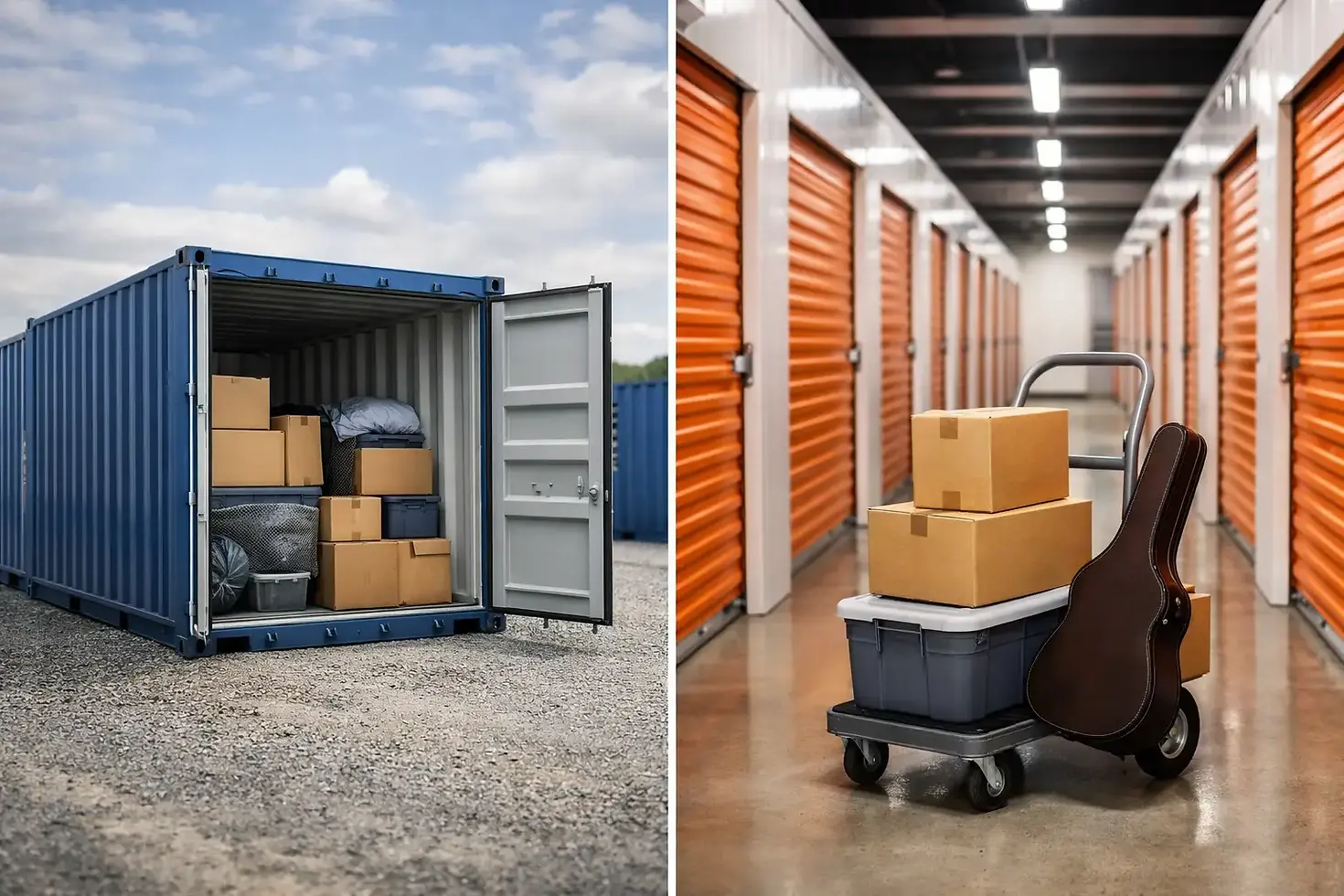
Container Storage vs Self Storage: Which Fits?

A house move rarely runs exactly to plan. Completion dates move, a renovation overruns, or there is simply too much furniture to take into a smaller flat. When comparing container storage vs self storage, the main difference is not just price. It is how often you need your belongings, who handles the loading, and whether you need space that works around your schedule.
Both options can keep household goods, furniture and business items secure. The right one depends on the job in front of you. For a planned move from Kingston, a long-term storage period or a full house load, container storage is often the practical route. For regular access to stock, tools or personal items, a self storage unit may be more suitable.
What is container storage?
Container storage usually means your items are loaded into a dedicated wooden storage container, often at your property or at a removals depot. The container is then stored in a secure warehouse until you are ready for it to be returned or delivered to a new address.
It is designed for customers who want storage as part of a wider removals service. Rather than hiring a vehicle, carrying furniture into a unit and returning later to collect it, you can have the packing, loading, transport and storage organised in one job. This is particularly useful for family moves, probate clearances, major refurbishments and landlord work where there is a clear collection date but no need for day-to-day access.
A container is generally sealed once loaded. Your goods are not mixed with another customer’s belongings, and a professional removals team can protect furniture, label items and make the most of the available space. That matters when storing wardrobes, sofas, dining sets, fragile pieces or higher-value furnishings that need careful handling.
What is self storage?
Self storage gives you a lockable unit at a storage facility. You take your goods to the site, load the unit yourself and usually retain access during the facility’s opening hours, or sometimes around the clock. Units come in a range of sizes, from a small locker for boxes to a room large enough for the contents of a home.
The key benefit is access. If you run a small business and need to collect stock each week, if you are decluttering gradually, or if you need somewhere for seasonal equipment, self storage gives you more control. You can visit, rearrange, add items or remove them without arranging a delivery from a removals company.
That convenience can also create more work. You are responsible for getting items to the site, unloading them safely and packing the unit efficiently. A poorly loaded unit wastes paid-for space and can leave heavy furniture difficult to reach. For people moving on a tight deadline, several trips to a storage facility can quickly become an extra pressure rather than a saving.
Container storage vs self storage: the practical differences
The choice usually comes down to access, labour, cost structure and the type of items being stored.
Access to your belongings
Self storage is the better fit if you expect to visit frequently. A tradesperson may need tools and materials at short notice. An online retailer may need to pick orders several times a week. A family with limited cupboard space may want easy access to winter clothing, luggage or children’s equipment.
Container storage is better suited to items that can be left safely in place until a known date. During a move, most people do not need access to their dining table, spare beds or boxed kitchenware every few days. They need it collected, stored properly and returned when the new property is ready.
If you do need an item from container storage, access can normally be arranged, but it is not intended as a walk-in service. The container may need to be located and opened at the warehouse, so notice and handling charges can apply. Be realistic about how likely you are to need something before choosing.
Collection, loading and delivery
With self storage, the customer normally manages transport. That could mean hiring a van, asking friends for help or booking a man and van service. It can work well for a few boxes, but the job becomes more demanding with heavy furniture, awkward staircases or a full house contents load.
Container storage is often more straightforward because collection and delivery are part of the service. A trained team can dismantle suitable furniture, wrap and protect it, load the container and transport it to secure storage. When the time comes, the same job can include delivery to your new address and, where required, furniture placement or installation.
For designer furniture, antiques, large mirrors or items going into a show home, this level of handling is often the deciding factor. Saving money on a unit is not much help if a poorly protected item is damaged while being moved in or out.
Cost and value
Self storage can look cheaper at first because the advertised monthly rate is clear. However, the total cost should include van hire or fuel, insurance, packing materials, locks, your time and any help needed to shift larger items. Some sites also have minimum rental periods, introductory rates that change later, or charges for access outside standard hours.
Container storage is commonly priced around collection, storage and redelivery. It may be better value when there is a large volume to move, when you need professional labour anyway, or when your storage is part of a complete removal plan. You are paying for the service as well as the space, which reduces the number of separate suppliers to organise.
For a small number of boxes stored for a month or two, self storage may be the sensible choice. For the contents of a two or three-bedroom home awaiting completion, containerised storage can be more efficient and far less physical.
Security and condition of goods
Both options should offer a secure site, controlled access and appropriate protections against unauthorised entry. Ask how goods are identified, whether the building is monitored, and what insurance cover is included or required. Do not assume every policy covers every type of item, especially valuables, documents, electronics or business stock.
Containerised storage adds another layer of control because your belongings are packed into a dedicated container and usually handled only when collected or returned. That limits unnecessary movement. It also keeps a full house load together, which makes redelivery easier to organise.
With self storage, you control who has access to the unit and how it is packed. This can be useful, but it puts more responsibility on you. Use proper boxes, avoid overloading shelves, keep an aisle to the back of the unit and never store damp furniture, food, flammables or prohibited materials.
Which option suits a house move?
For most house moves, container storage makes sense when there is a gap between leaving one property and moving into another. It is particularly useful where contracts have exchanged but completion dates are not aligned, where a chain has delayed, or where temporary accommodation has limited space.
It also helps keep moving day simpler. Instead of loading a van, unloading at a storage facility, then repeating the process weeks later, the removals team can move your goods into storage and bring them out when the new address is available. The fewer times furniture is handled, the lower the chance of damage or disruption.
If you are moving in stages and need to retrieve possessions regularly, self storage may offer more flexibility. For example, someone downsizing from a house to a flat might use a unit while they decide what to keep, sell or pass on. In that situation, easy access can be worth the extra effort.
Storage for businesses, landlords and interiors projects
Business needs are more varied. Self storage is often useful for accessible stock, marketing materials, event equipment and tools. It gives small firms room to operate without committing to a larger commercial premises.
Container storage can work better for office furniture during a refit, archived equipment, surplus furnishings or stock that does not need frequent picking. Landlords preparing a property for new tenants may also benefit from collection and storage in one service, particularly when clearing furniture on a deadline.
For interior designers and furnishing projects, storage is only one part of the operation. Items may need to be received, checked, held securely, delivered into the property, positioned carefully and have packaging removed. OWN Removals & Storage can combine containerised storage with white-glove delivery and installation where the job calls for more than a basic unit and a padlock.
Questions to ask before booking
Before choosing either service, confirm the storage period, access arrangements, notice needed for return, insurance requirements and whether collection and redelivery are included. Measure larger pieces and make an inventory, especially if you are storing for several months. A clear list makes it easier to choose the right space and find essential items later.
Also consider the next move, not just the first one. A low monthly rate is less useful if you later need to hire a van, find labour and move everything again at short notice. If your belongings are going straight from your current property to storage and then into a new home, a managed container service is often the calmer, more controlled option.
Choose self storage when regular access is genuinely useful. Choose container storage when you want professional collection, secure long-term holding and an organised return delivery. A quick inventory and a clear move date will usually make the right route obvious.



Comments